

Dual Vision Camera
Wide-Angle and Magnified Imaging. All in One Camera.
Capture both wide-area and magnified images with a single camera, revealing fine scratches and defects while keeping sight of the entire target.
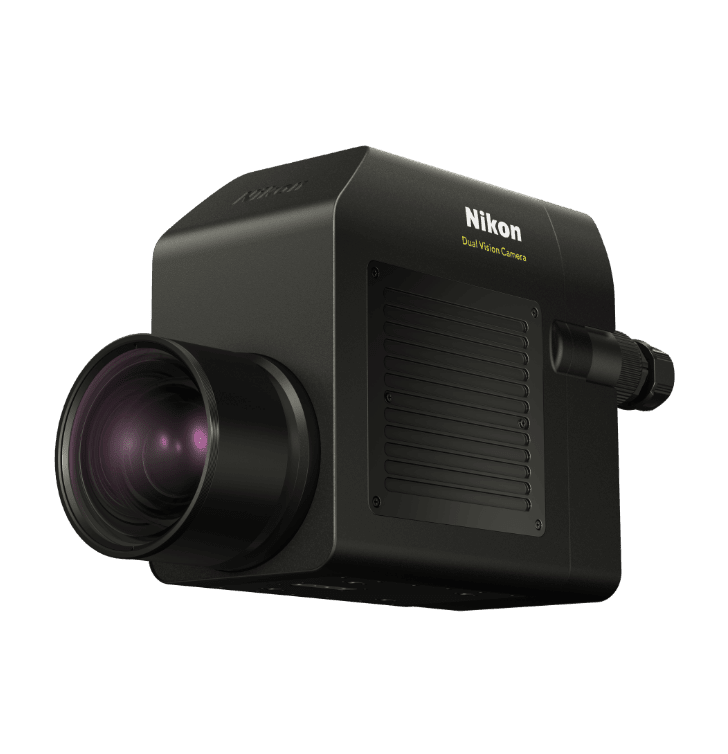
Key Features
Wide-angle and magnified imaging with a single camera
Simultaneously captures high-resolution images with a pixel resolution of up to 12 μm*1
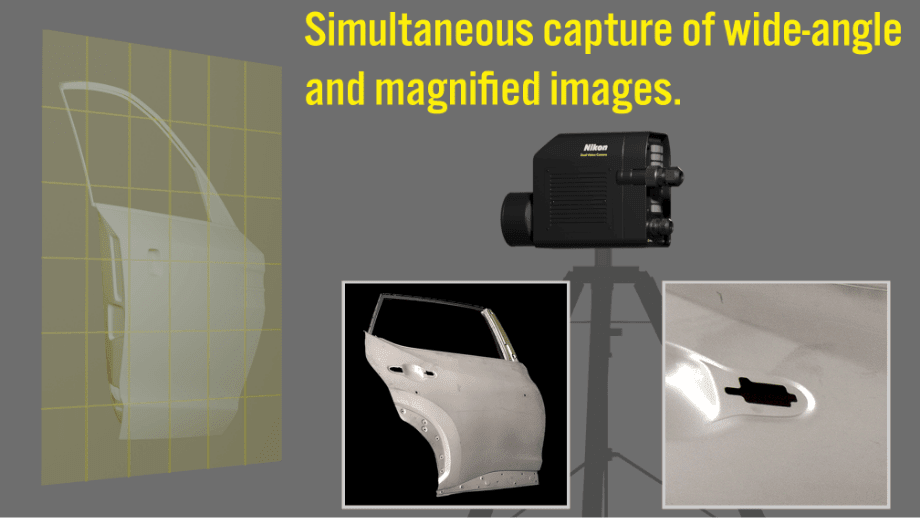
Using dual sensors with the same resolution and Nikon’s proprietary coaxial optical system, the camera can capture a wide-angle image of the entire target while simultaneously acquiring a high-resolution magnified image of a selected area. Its 6x optical magnification minimizes the image-quality degradation associated with digital zoom and enables fine scratches and defects to be clearly captured at a pixel resolution of up to 12 μm. Wide-angle and magnified images can also be captured in association with each other, helping improve inspection quality and traceability.
*1
At a working distance of 120 mm.
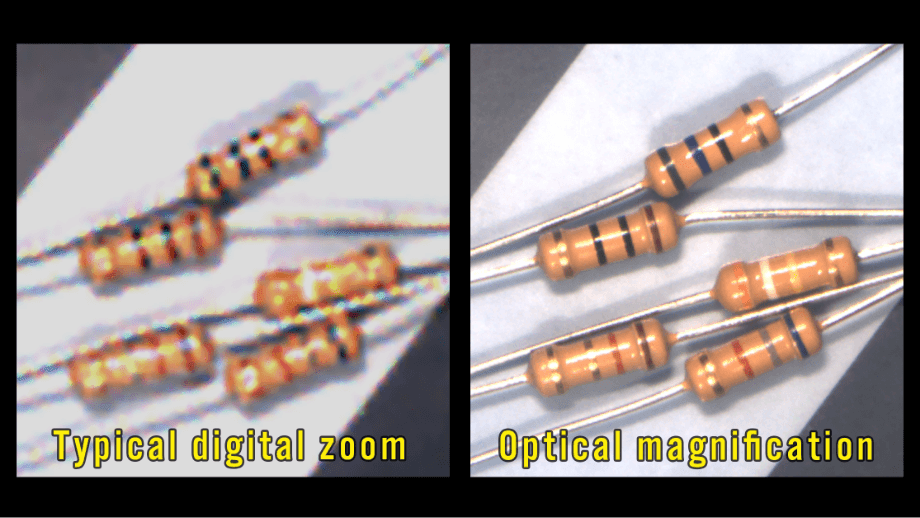
High-resolution recording equivalent to up to approximately 288 megapixels*2 supports to improved inspection quality
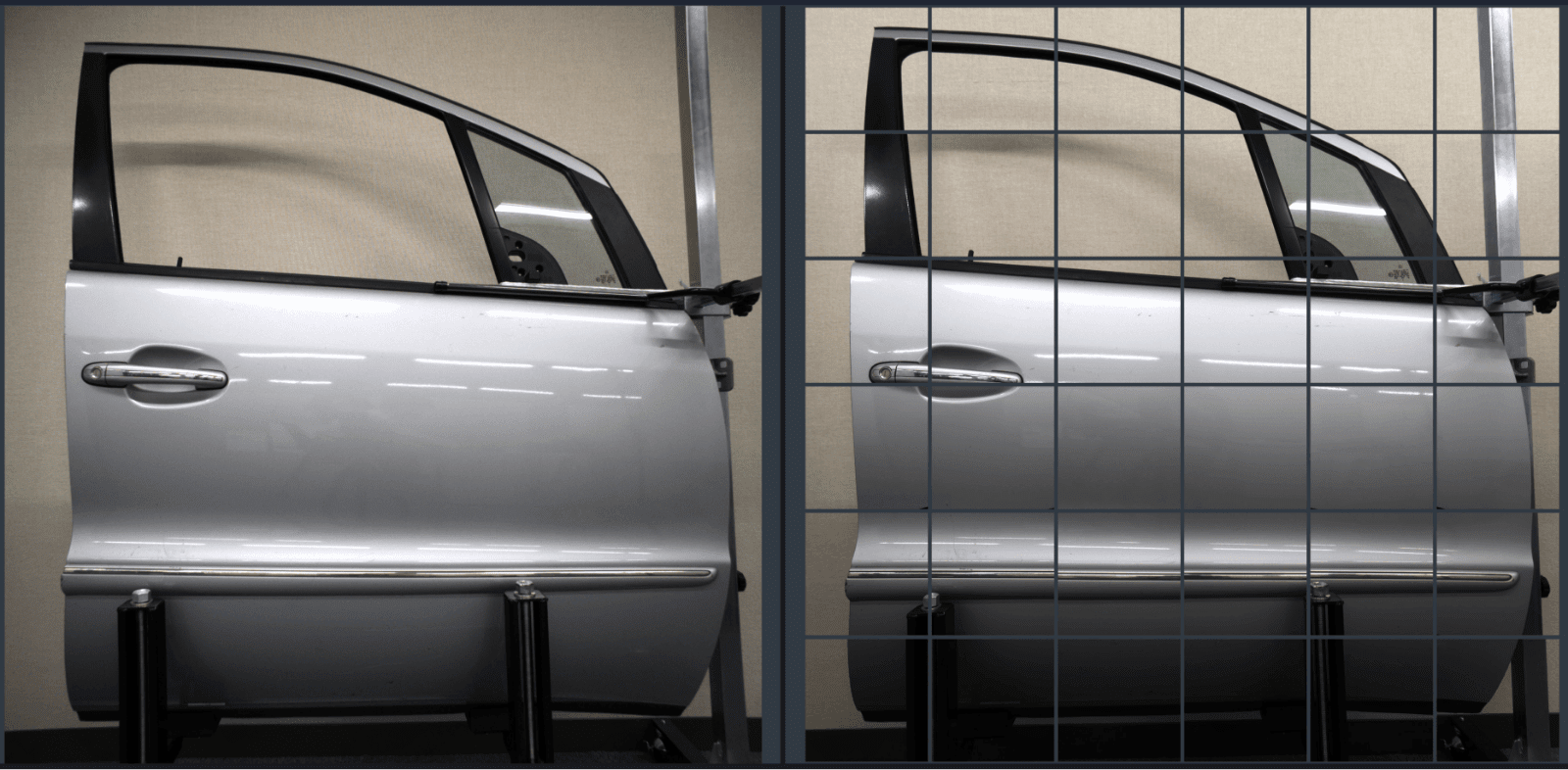
Equipped with an 8.1-megapixel sensor, the camera uses the Image Driving™ function*3 and its 6x magnification optical system to capture selected areas within the wide-angle field of view. This enables high-definition recording with an amount of information equivalent to up to approximately 288 megapixels.
From small electronic components to medium- and large-sized workpieces such as automotive components and door panels, the camera can record fine scratches and defects in high detail, helping reduce missed defects and improve inspection quality.
*2
Converted value based on the effective recording area obtained by sequentially capturing magnified images. Equivalent to the amount of information contained in approximately 36 images in the 8-megapixel class.
*3
A function that rapidly moves the magnification optical system inside the Dual Vision Camera to a specified position within the wide-angle field of view.
Shorter imaging cycle times and reduced equipment costs
With the Image Driving™ function, users can easily obtain high-resolution magnified images simply by specifying the area they want to inspect in the wide-angle image. This reduces the number of times the imaging position needs to be changed using a robot, slider, or similar mechanism to one-ninth or less,*4 shortening the imaging sequence and contributing to improved productivity.
Because the camera can cover a wide area at high resolution without requiring numerous dedicated magnification cameras, depending on the application, a system incorporating dozens of magnification cameras can potentially be replaced by a single Dual Vision Camera. This is expected to simplify system configurations and reduce installation and operating costs.
*4
Based on Nikon evaluation conditions. Comparison with a camera equipped with a 32-megapixel sensor capturing an equivalent field of view.
Supporting automated inspection and smart factories
The all-in-one design, integrating everything from the lens to the camera housing, reduces the complexity of lens selection and adjustment while also contributing to lower installation workload and capital investment.
The camera is also designed for easy integration into automated inspection and robotic systems. By reducing reliance on manual visual inspection, it helps stabilize quality control, reduce labor requirements and maintenance workload, and support smart factory initiatives.
Product Overview
| Product name | Dual Vision Camera |
|---|---|
| Model | NDV-6M8DC |
| Image sensors | Two 8.1-megapixel color CMOS sensors (wide-angle and magnification) |
| Shutter type | Global shutter |
| Focal length (wide-angle) | 6.4 mm (35mm-format equivalent: approx. 25 mm; diagonal angle of view: 82°) |
| Magnification | 6x optical |
| Focus | Motorized focus |
| Equivalent magnified recording resolution | Up to approx. 288 megapixels*2 |
*
A control PC, lighting, and other equipment are required separately for use.


